Welcome to Octopus Moving Company | Massachusetts, Rhode Island, North Carolina
Welcome to Octopus Moving Company | Massachusetts, Rhode Island, North Carolina


Relocating a business in Boston demands precise coordination, specialized expertise, and reliable execution to protect assets and minimize downtime. In this guide, you’ll discover the core service categories available in Greater Boston, learn how professional movers ensure efficiency and cost transparency, explore pre-move planning essentials, examine industry-specific relocation solutions, review client experiences, and find criteria for choosing the right moving partner. Whether you’re moving offices, data centers, labs, or warehouses, understanding Boston’s commercial relocation options will help you secure a seamless transition.
Commercial relocation services in Boston encompass distinct offerings designed to support every phase of a business move. By matching specialized services with organizational needs, providers enhance asset protection, streamline logistics, and promote rapid operational recovery.
Below is a comparison of primary service categories in Boston, outlining key characteristics and business benefits.
Each category addresses a unique dimension of commercial relocation, leading directly into detailed service descriptions and benefits.
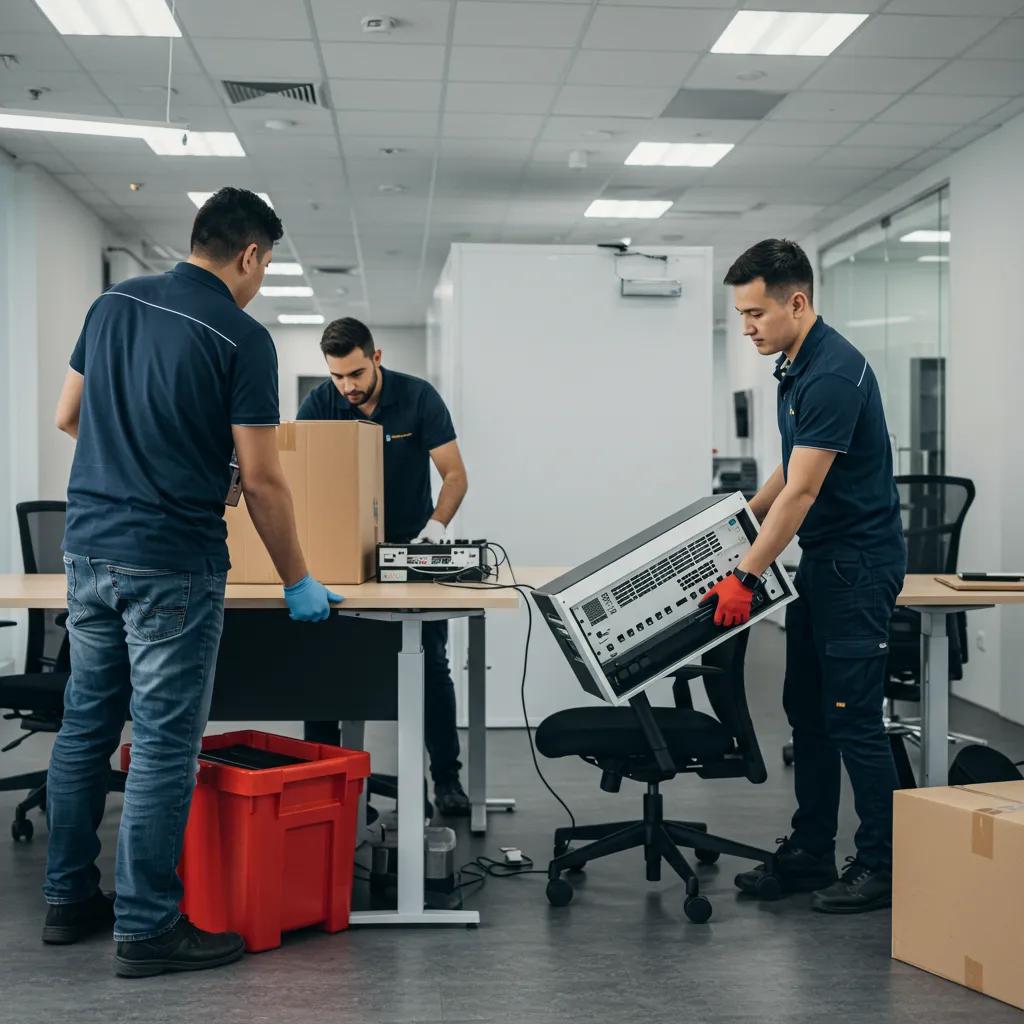
Office moving services coordinate every aspect of transferring desks, workstations, and meeting rooms. By planning layout designs, handling disassembly, and reconnecting IT systems, movers improve operational continuity and reduce setup time.
This structured approach ensures businesses resume full productivity with minimal interruption, laying the groundwork for secure IT relocations.

IT equipment relocation combines precision packing, specialized rigging, and secure transport tailored to servers, network racks, and storage arrays. Movers deploy shock-absorbent crates, climate-controlled vans, and clean-room procedures to preserve data integrity and hardware performance. For more information, visit our octopus moving company.
By following these protocols, companies safeguard critical infrastructure and accelerate system restoration, preparing the way for complex lab-grade moves.
Boston’s biotech and healthcare sectors rely on specialized lab and medical relocation services that adhere to regulatory standards and environmental controls. Providers employ custom crating, shock-monitoring devices, and temperature regulation to prevent calibration drift and contamination.
These precautions maintain compliance and functionality for sensitive devices, bridging laboratory moves into secure storage solutions when required.
Commercial storage in Boston includes flexible short-term staging and long-term warehousing with multi-layer security and environmental controls. Climate-controlled vaults, 24/7 surveillance, and inventory tracking systems support document archiving, excess stock management, and interim staging during octopus moving storage transitions. Our Boston moving and storage provides secure, climate-controlled commercial storage.
This combination of features creates a seamless buffer between move phases, which dovetails into broader corporate relocation services.
Corporate relocation services encompass both facility moves and individual employee transfers. Coordinators align household goods shipments, housing search, and orientation programs to promote workforce continuity. By synchronizing office logistics with employee needs, providers enhance retention and reduce relocation stress. We coordinate long-distance moves from Boston for employee transfers.
Effective corporate relocation underpins successful office transitions and strengthens organizational agility.
Licensed moving companies in Boston leverage professional credentials, project management methodologies, and specialized resources to deliver dependable commercial relocation. By embedding quality controls and industry best practices, providers improve predictability, safety, and client satisfaction.
Octopus Movers Boston maintains full licensing and carries comprehensive insurance, ensuring compliance with local regulations and financial protection for client assets. This credentialing builds trust and underwrites accountability throughout the relocation process.
These assurances set a foundation for streamlined project planning and risk mitigation in every commercial move.
Dedicated project managers coordinate timelines, resource allocation, and inter-team communications to synchronize every relocation phase. By applying principles of critical path analysis and contingency planning, providers reduce unplanned delays and overhead costs.
This structured oversight transforms complex logistics into predictable workflows, enabling faster return to normal business operations.
Moving companies in Boston customize relocation strategies based on industry requirements, from sterile lab environments to high-traffic retail spaces. By integrating sector-specific protocols, providers maintain compliance and operational readiness.
This targeted approach aligns facility moves with sectoral best practices, seamlessly transitioning into secure storage or corporate relocation when needed.
Commercial movers partner with storage facilities that feature multi-factor access control, environmental monitoring, and seamless transfer interfaces. By combining storage with relocation services, businesses enjoy single-source accountability and streamlined logistics.
These capabilities extend the project management continuum from onsite packing to long-term asset protection.
Commercial moving costs in Boston reflect a combination of logistical complexity, specialized handling, and market conditions. Transparent pricing models and clear communication of cost drivers empower businesses to budget effectively and avoid surprises.
Commercial relocation pricing depends on distance, volume, labor hours, equipment requirements, and any specialized handling needs. Seasonal demand and permit fees can also affect total costs.
Commercial relocation costs are influenced by various factors, including distance, volume, labor hours, and specialized equipment needs. Understanding these variables allows businesses to budget effectively and make informed decisions.
This citation supports the article’s discussion on the factors that influence commercial moving costs.
Accurate estimates arise from on-site surveys, detailed inventories, and binding quotes that specify every service component. Businesses should provide floor plans, itemized asset lists, and desired move windows to secure reliable bids.
By clarifying scope and expectations, companies reduce the risk of cost overruns and scope creep.
Effective pre-move planning unites stakeholders around clear objectives, timelines, and responsibilities. By following a structured checklist and downtime minimization strategies, companies ensure a smooth transition.
A thorough moving checklist defines tasks, deadlines, and responsible parties to streamline coordination across departments.
Completing these steps builds momentum toward a timely, cost-effective relocation.
Strategic sequencing of tasks preserves critical operations by shifting non-essential activities outside peak hours.
These tactics maintain productivity levels and reinforce employee confidence throughout the move.
Pre-move planning integrates logistical, technical, and human factors into a unified project roadmap. By simulating site conditions, testing equipment relocation methods, and aligning resources in advance, planners reduce uncertainties and expedite final hand-over.
This strategic foundation dovetails into specialized industry-specific solutions that follow in the next section.
Boston’s leading sectors—biotech, finance, retail, and manufacturing—depend on niche relocation services that reflect their operational imperatives. Tailoring protocols to industry standards ensures continuity and regulatory compliance.
Specialized lab movers employ vibration-dampening rigs, custom crating, and temperature-controlled vehicles to transport chromatography units, centrifuges, and life-science analyzers. These methods preserve calibration and maintain sample integrity.
This attention to detail transitions directly into data center best practices.
Data center relocations rely on redundant power solutions, structured cabling labels, and rack-by-rack migration plans. Experts run dry tests of system transfers and monitor uptime to safeguard network availability.
These precautions integrate smoothly into retail and restaurant moves requiring precise fixture setups.
Retail and restaurant relocations combine fragile fixture handling with interior layout optimization. Movers reassemble display cases, kitchen equipment, and point-of-sale systems while adhering to health codes and design specifications.
This methodical approach parallels the heavy-lift techniques used in industrial moves.
Heavy machinery, forklifts, and pallet racking demand rigging specialists, crane services, and structured load planning. Inventory staging areas and cross-docking techniques speed material flow and reduce storage clutter.
These industry-grade solutions complete the spectrum of Boston’s specialized relocation capabilities.
Real-world feedback and case studies reveal how trusted providers deliver on their service promises. By analyzing client testimonials and project outcomes, prospective customers gain confidence in their relocation strategy.
Clients consistently praise punctuality, professionalism, and transparent communication when working with established Boston movers. Core themes include:
This feedback lays the groundwork for deeper case study insights.
Case studies highlight challenges, solutions, and outcomes across sectors:
These examples underscore proven methodologies and client satisfaction metrics, leading into common concerns that surface during planning.
Commercial relocation often raises recurring concerns regarding insurance coverage, timeline accuracy, packing protocols, and specialized handling. Businesses regularly verify liability limits, request phased move schedules, confirm cleanroom requirements, and evaluate climate-controlled transport options.
Understanding these priorities helps align expectations and informs the final decision process.
Selecting the ideal moving partner involves evaluating credentials, obtaining transparent estimates, and leveraging local expertise. A structured decision framework ensures the chosen provider meets both logistical and budgetary objectives.
Key selection criteria include licensing, insurance coverage, track record, equipment capabilities, and industry expertise. Every choice factor contributes to minimizing risk and improving project outcomes.
These benchmarks guide businesses toward partners that deliver predictable results.
To obtain accurate quotes, businesses should submit a detailed move outline through online forms or arrange an on-site survey. Essential steps include:
A clear quoting process streamlines decision-making and aligns service expectations.
Local moving companies offer regional knowledge, established vendor relationships, and rapid response capabilities. Their familiarity with local regulations and traffic patterns reduces delays and regulatory hurdles, ensuring smoother transitions.
This citation supports the article’s emphasis on the benefits of using local moving companies for commercial relocation.
This localized expertise ensures smoother transitions and fosters long-term client trust.
Relocating a commercial operation in Boston involves a series of coordinated steps—from selecting specialized service categories and managing project timelines to controlling costs and preparing employees. By aligning industry-tailored solutions, transparent pricing models, and local expertise, companies can execute moves with minimal disruption and maximum reliability. Engage a licensed, insured provider to benefit from advanced project management, secure storage options, and proven methodologies—ensuring your Boston relocation succeeds on schedule and within budget.