Welcome to Octopus Moving Company | Massachusetts, Rhode Island, North Carolina
Welcome to Octopus Moving Company | Massachusetts, Rhode Island, North Carolina

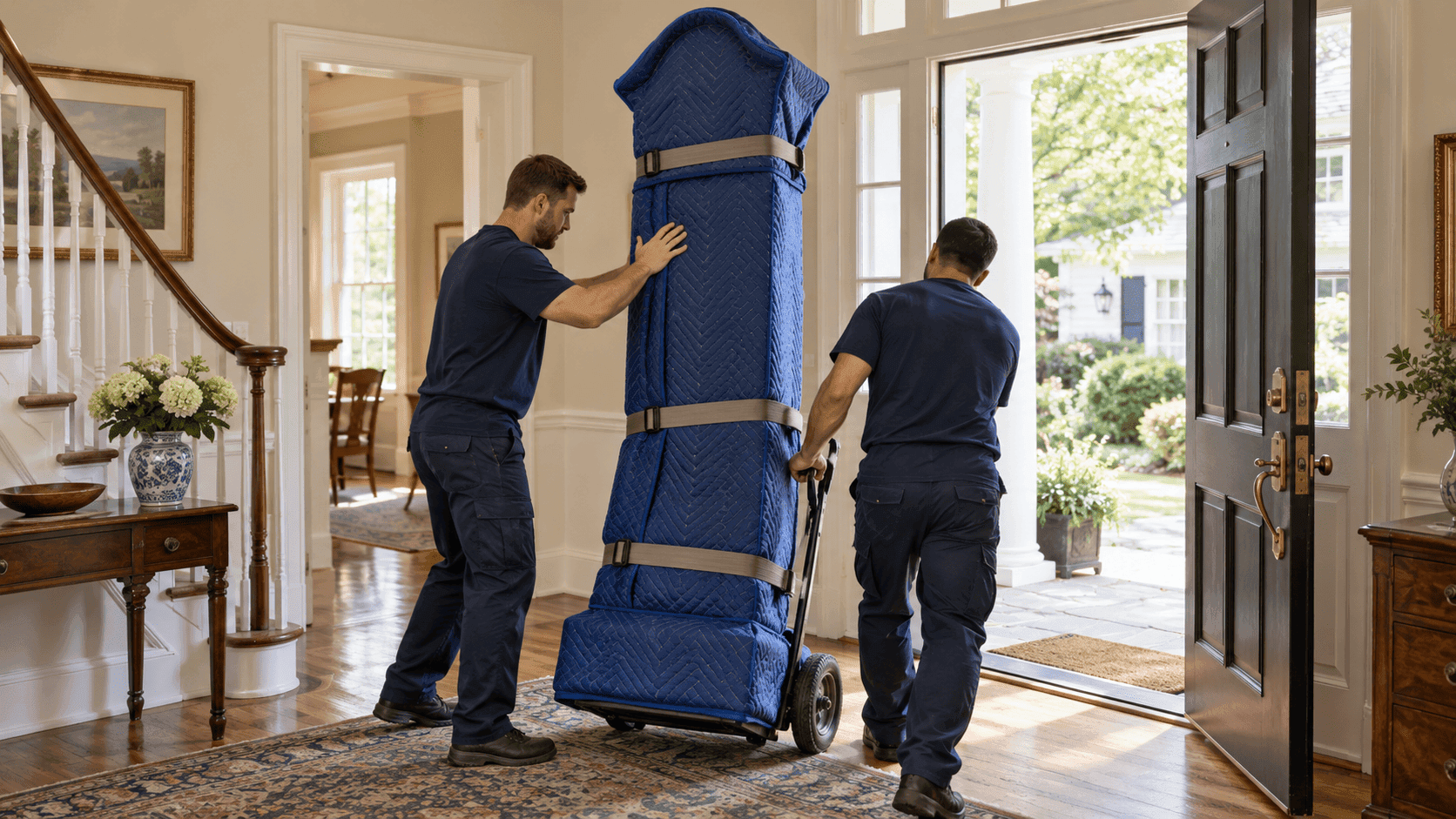
Knowing how to move a grandfather clock comes down to one rule: the case moves last. The pendulum, the weights and the chains or cables that drive the movement all come out or get locked down first, and the clock stays upright the whole way. Skip that and a short trip down the hallway can knock a chain off its sprocket or swing a loose weight into the glass. This guide walks through the prep the way clock manufacturers describe it, how to load and transport the clock, how to get it running again, and when it makes more sense to hand the job to grandfather clock movers.
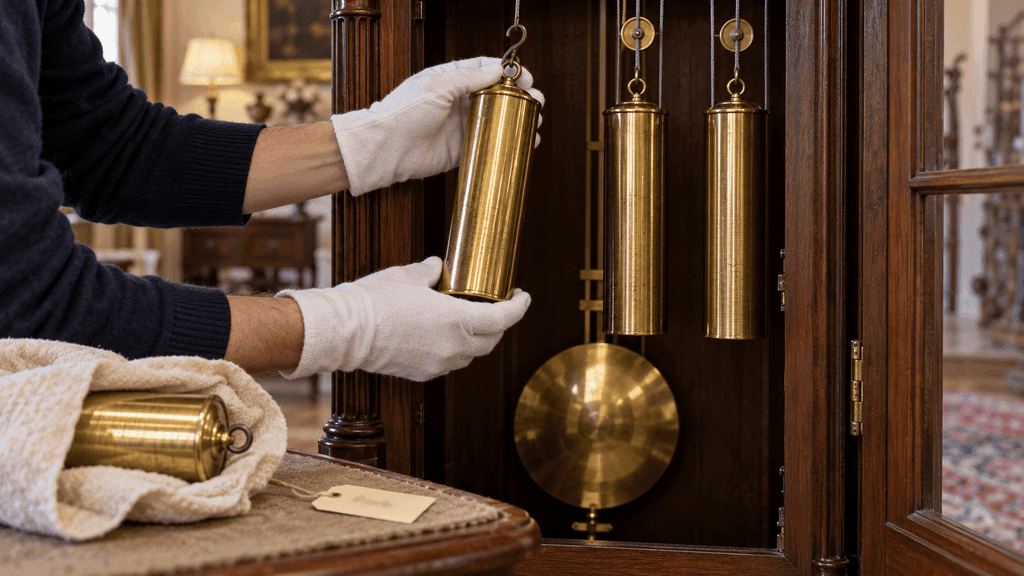
Open the front door and look at what powers the movement. Most grandfather clocks use one of two systems, and the prep is different for each:
Some clocks also chime on long metal tubes hung inside the case, and those come out before the move too. If you still have the owner’s manual, find it now. Manufacturers don’t all prepare their movements the same way, and your manual beats any general guide, this one included.
Gather your supplies before you touch anything inside the case:
Take a few photos of the inside of the case as well. They save a lot of guessing later, when you’re holding three weights and trying to remember which hook each one came off.

These steps follow the moving instructions Howard Miller publishes for its floor clocks, which apply to most weight-driven grandfather clocks. Work through them in order.
Chains are the one step where manufacturers differ. Hermle’s relocation guide lifts the chains off the sprockets and packs them in a small bag instead of tying them in place. Both methods work on the right clock, which is why the manual for your own clock is the tiebreaker.
Howard Miller’s instructions are clear about orientation: keep the clock upright while you move it. That holds in the vehicle, not just on the dolly.
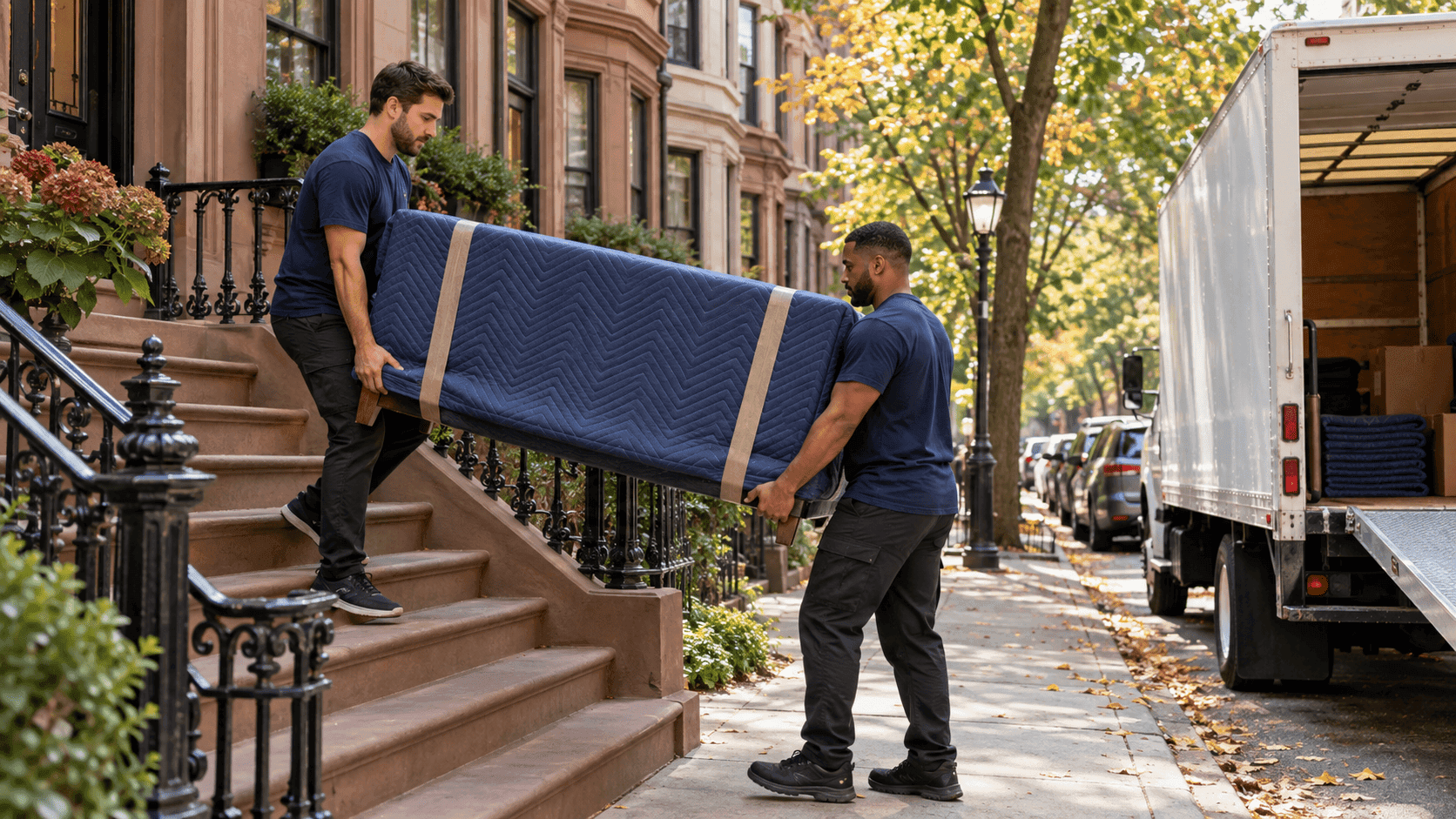
In a pickup truck, the same rules apply: upright, strapped to the front of the bed against the cab, fully wrapped and covered against rain. An enclosed box truck is the safer choice for anything valuable, which is part of why every Octopus Moving crew arrives with a clean box truck, blankets and floor protection included in the hourly rate.
Put the clock where it will live before anything goes back inside it. Moving an assembled clock even a few feet means starting the prep over.
Let the clock run for a few hours and listen for an uneven tick or a chime that sounds off. Over the next day or two, compare it with your phone. If it runs fast or slow, the nut at the bottom of the pendulum sets the rate: Hermle notes that turning it clockwise speeds the clock up and counterclockwise slows it down. An uneven tick usually points back to a case that isn’t level, so recheck the feet before touching the movement.
Rolling a modern clock across the living room is a reasonable weekend job. A few situations change that:
That third point deserves a closer look. Under the FMCSA’s guidance on valuation and insurance options.pdf), an interstate mover’s Released Value option pays no more than 60 cents per pound per article. Full Value Protection covers replacement value, but movers can limit liability on items worth more than $100 per pound, antiques included, unless you list them on the shipping documents. Tell your mover about the clock in writing before moving day.
Octopus Moving’s white glove moving services are built for pieces like this: custom crating for fragile and valuable items, careful wrapping of furniture, protection for floors, walls and doorways, and placement exactly where you want it in the new home. Every mover is a full-time employee supervised by the owner, never a day laborer, and the company is licensed and insured under USDOT 3125432.
In Massachusetts, our white glove movers in Boston already know the building requirements, elevator reservations and access issues in Back Bay, Beacon Hill, the Seaport and Cambridge. In Rhode Island, our guide to white glove moving in Providence covers how crews handle antiques around the East Side’s narrow streets and historic staircases.
If the new house isn’t ready yet, temperature-controlled moving and storage is a far better place for a clock than a damp basement or an unheated garage. Octopus storage starts at $75 a month for a room or less, with a one-month minimum.
Keep a grandfather clock upright whenever you can. Howard Miller’s moving instructions tell owners to keep the clock in an upright position while moving it, even after the weights, pendulum and chime tubes are out. If a tight staircase forces a tilt, keep it brief and stand the clock back up as soon as the turn is cleared.
Remove the weights, pendulum and any chime tubes, wrap the case completely, and stand the clock upright at the front of the bed against the cab. Strap it at two heights so it can’t rock or tip, and cover it against rain. Drive slowly over bumps, and use an enclosed truck instead for antiques.
It depends on the clock and the route. As part of a local move, Octopus Moving bills by the hour, starting at $139 an hour for two movers with the truck, blankets, gas and tolls included. Antiques that need custom crating or white glove handling are quoted individually, and stairs and distance add time.
An in-home or phone estimate with photos of the clock and the route gives the most accurate number.
Yes. Howard Miller’s instructions call for removing the weights and pendulum and securing the cables or chains whenever the clock is moved, and even a short trip across the house means tilting the case onto a dolly. A hanging weight or swinging pendulum can hit the case or the glass the moment it tips.
Book at least three to four weeks ahead if the clock is part of a white glove or high-value move, which is what Octopus Moving recommends for complex relocations. Standard local moves can usually be booked two to three weeks out, and more notice helps during spring and summer, the peak moving season.
If the clock is modern, you have help and the route is flat, the steps above will get it to its new corner in one piece. If it’s an antique, the stairs are narrow or the move crosses state lines, a trained crew is the lower-risk choice, and it costs less than a clockmaker’s repair bill.
Get a free quote for your grandfather clock move or call (781) 333-5383.