Welcome to Octopus Moving Company | Massachusetts, Rhode Island, North Carolina
Welcome to Octopus Moving Company | Massachusetts, Rhode Island, North Carolina

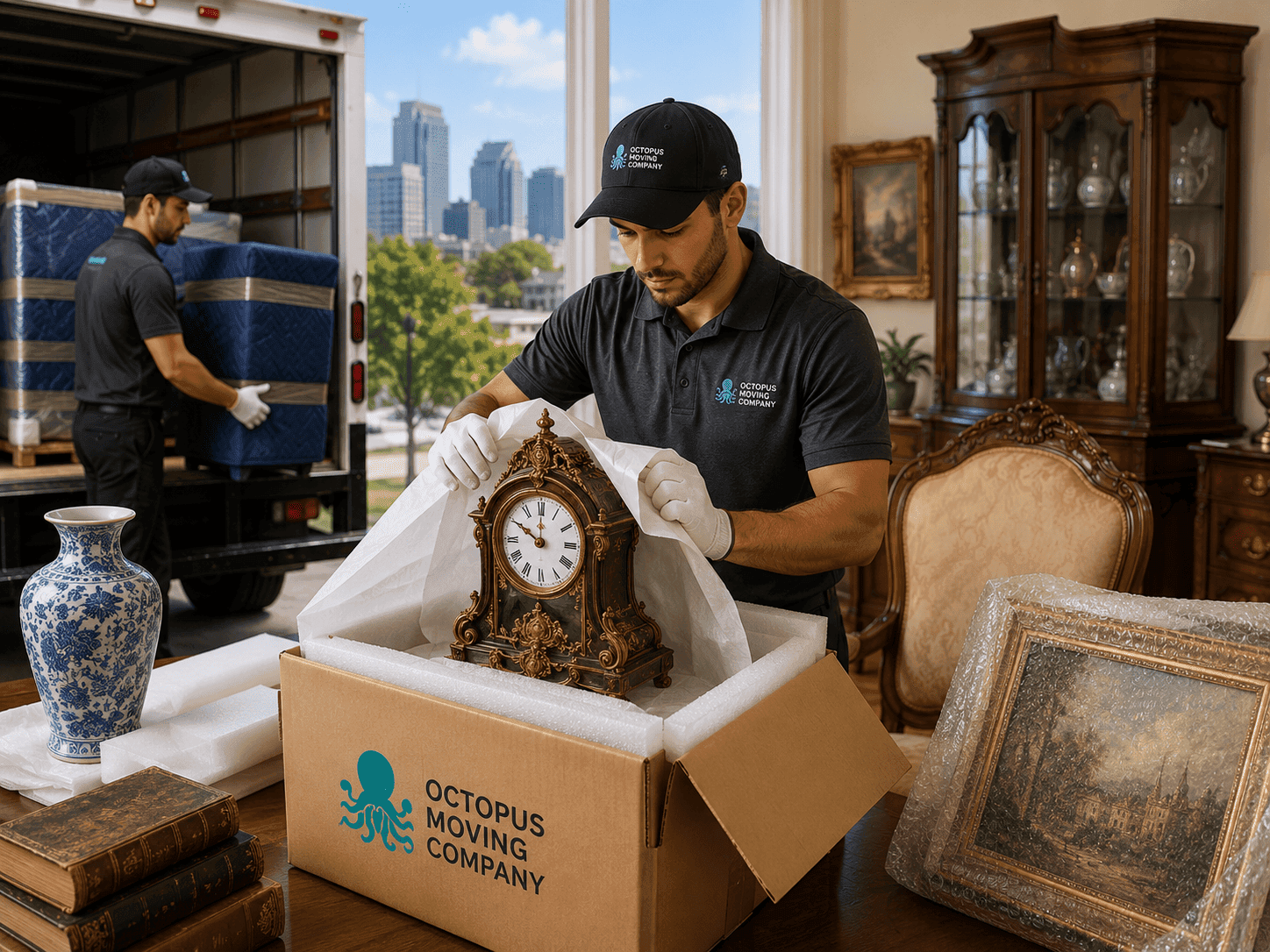
There’s a version of moving where the biggest concern is whether the couch fits through the door. Then there’s the version where you’re staring at a 200-year-old armoire, a set of oil paintings that have been in your family for three generations, or a collection that took decades to build, and you’re trying to figure out how to get all of it to your new home without a single scratch.
Those are two completely different problems. And most moving companies are only equipped to solve the first one.
If you’re dealing with antiques, fine art, rare collectibles, or any item where damage means a loss you simply can’t replace, this guide is for you. We’re going to walk through exactly what proper handling looks like, what separates a genuinely capable mover from one that just says the right things on a phone call, and what you need to do before, during, and after a high-value move in Raleigh, NC.
The gap between a standard residential move and a high-value item move isn’t just about being more careful. It’s about an entirely different approach from the moment the job is scoped.
A standard move is built around volume and efficiency. The goal is to get everything from point A to point B quickly and without damage. That works fine for a sectional sofa or a set of IKEA furniture. It doesn’t work for a piece that’s irreplaceable, structurally fragile, sensitive to temperature changes, or worth more than everything else in the house combined.
A standard move focuses on efficiency and volume, while antique movers prioritize preservation and protection. Specialized movers use customized crates, padding, and climate-controlled transportation to safeguard items sensitive to vibration, temperature, and humidity. Each piece is assessed individually to determine the best packing and transit method.
What this means practically:
If a mover you’re speaking with can’t explain their item-level assessment process, that’s the first thing you need to ask about before you go any further.
This is worth clarifying because people sometimes underestimate what falls into this category.
High-value and specialty items for moving purposes include:
The unifying factor isn’t just monetary value. It’s that damage to any of these items is either irreversible, extremely expensive to repair, or both. That’s what drives the specialized approach.
Every fine art or antique relocation begins with a thorough consultation. During this phase, the moving company evaluates each item’s condition, materials, and fragility. This assessment helps design a tailored moving plan that minimizes risk. Transparency, documentation, and communication are key components of this stage.
This is where the difference between a general mover and a genuine specialist becomes visible. A proper assessment means looking at every item individually, understanding what it’s made of, where it’s fragile, what environmental conditions it’s sensitive to, and what handling approach is appropriate for it.
If a mover quotes a high-value job over the phone without asking detailed questions about each piece, they’re not doing an assessment. They’re guessing.
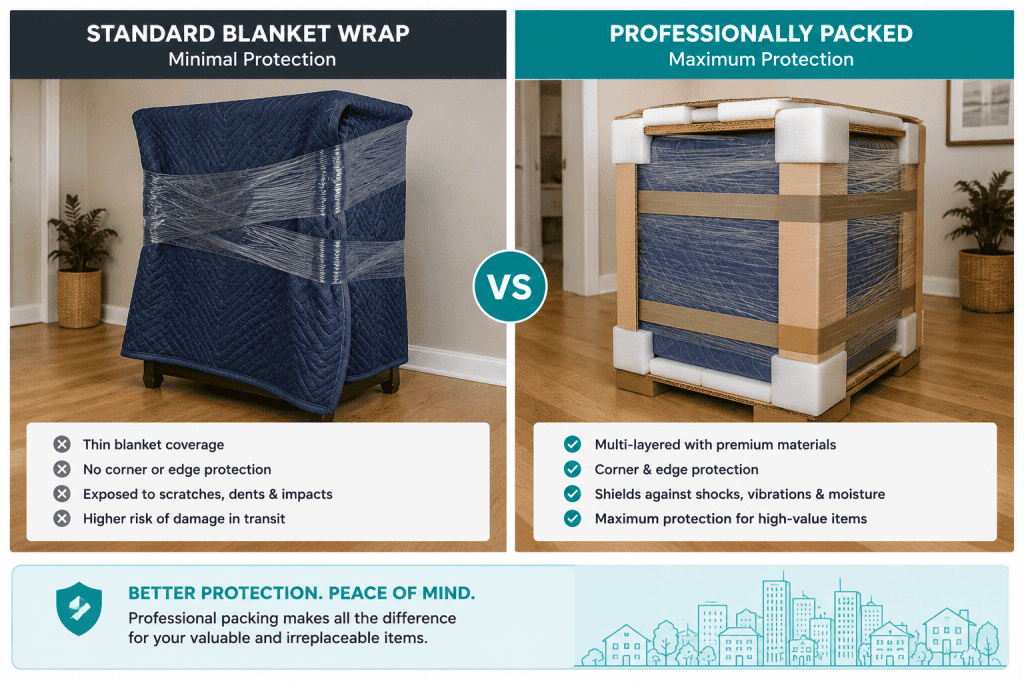
Professional fine art movers use industry-approved packing materials, such as acid-free paper, custom-built crates, and corner protectors, to keep these items secure.
Here’s what that actually looks like in practice:
When loading artwork into the moving truck, pieces should be stored upright to avoid pressure and bending. Protect corners, which are especially prone to damage, by adding cardboard or foam corner protectors before boxing.
For items that are particularly fragile, unusually shaped, or extremely high in value, standard wrapping isn’t enough. Custom wooden crates built to the exact dimensions of the piece are the right solution.
Creating custom crates for fine art and antiques is a crucial step in preserving these items. Tailored to fit each unique piece, these crates provide sturdy protection against impact and environmental elements. Cushioning should use acid-free tissue paper or bubble wrap to protect delicate surfaces.
Custom crating is not always necessary for every piece, but for anything going a long distance, being loaded and unloaded multiple times, or where the financial or sentimental loss from damage would be severe, it’s the right investment.
This is something that gets overlooked by most people planning a move, and it matters significantly for certain types of items.
North Carolina summers are hot and humid. Winter can bring rapid swings in temperature and moisture levels. For items that are sensitive to these conditions, the environmental exposure during a move, even a short local move, can cause real damage.
Temperature stability is especially critical for oil paintings, antique furniture, musical instruments, and textiles. Professional transport services maintain controlled conditions throughout transit to reduce the risk of environmental damage.
Oil paint expands and contracts with temperature. Antique wood furniture, particularly pieces with veneer or inlay, can warp, crack, or delaminate when exposed to significant moisture. Textiles can absorb humidity in ways that cause permanent structural changes.
This doesn’t mean every local move in Raleigh needs a climate-controlled truck. But it does mean that for items sensitive to these conditions, the timing of the move, the duration of exposure, and how items are staged during loading and unloading all need to factor into the plan.
Start by creating a detailed inventory of all items you’re relocating. Include photos, dimensions, and any existing damages to document the condition of each piece. This step is crucial for insurance purposes and ensures proper handling during the move.
Do this even if the mover you’ve chosen is excellent. Documentation protects everyone. If a piece arrives with a pre-existing chip that was there before the move, you want that on record. If something happens during transit, you want clear before-and-after documentation to support any insurance claim.
For significant pieces:
If you have pieces that haven’t been formally appraised recently, a move is the right moment to address that. Securing appropriate insurance coverage for your art and antiques is vital. Start by getting a professional appraisal to determine the current market value of each item. This appraisal should be done by a certified appraiser who specializes in fine art.
Moving insurance, including the enhanced coverage options offered by reputable movers, is calculated based on declared value. If you don’t have a current appraisal, you’re either underinsuring or guessing.
The American Society of Appraisers and the Appraisers Association of America both maintain directories of certified appraisers by specialty. For Raleigh residents with significant collections, this is a straightforward step that protects you well beyond the move itself.
This is the part most people skip until it’s too late, and it’s one of the most important decisions you’ll make for a high-value move.
| Coverage Type | What It Pays | Right For |
| Released Value (Basic) | $0.60 per pound | Standard household goods only |
| Declared Value Protection | Repair or replacement up to declared value | Most residential high-value moves |
| Full Replacement Value | Replacement at current market value | Significant collections and fine art |
| Third-Party Fine Art Insurance | Agreed value with no depreciation | Museum-quality pieces and major collections |
The default coverage offered by most movers, called released value protection, pays sixty cents per pound. A painting that weighs four pounds and is worth $8,000 would receive $2.40 under that coverage. That number tells you everything you need to know about why default coverage is not appropriate for high-value items.
Ask any mover you’re considering to explain exactly what their enhanced coverage includes, how claims are filed, and what the process looks like if damage occurs. A company that can’t answer those questions clearly is not equipped for a high-value move.
You shouldn’t have to guess whether a moving company is genuinely equipped for high-value work. These questions will tell you quickly.
Ask about their specific experience:
Ask about materials and methods:
Ask about insurance and documentation:
Ask about licensing:
A mover that answers all of these with confidence, detail, and without deflection is worth booking. One that gives vague answers, rushes past the insurance question, or can’t explain their packing process for specific item types is not the right fit for high-value work.
You’d be surprised how often these happen, even among people who understand the value of what they own.
Packing antiques in standard boxes with standard materials. Generic packing materials are designed around standard household goods. They don’t account for the specific fragility, weight distribution, or surface sensitivity of antique pieces. What works for a set of dishes will not protect a piece of hand-painted porcelain.
Letting movers handle high-value items without a prior briefing. Even a skilled crew needs to know which items require extra care. If you haven’t walked through your collection with the team before they begin loading, pieces that need special handling may get treated like everything else.
Assuming standard moving insurance covers antiques at full value. This comes up in insurance claims constantly. Released value coverage is entirely inadequate for high-value items. If you’re moving anything significant, you need to have the insurance conversation before the move date.
Not documenting condition before the move. Without pre-move photos, any damage claim becomes a dispute over whether the damage happened during the move or was pre-existing.
Choosing a mover based on price rather than capability. For a standard move, price is a reasonable factor to weigh. For high-value items, the question is capability first. A lower bid from a company that isn’t equipped for specialty work is not a good deal.
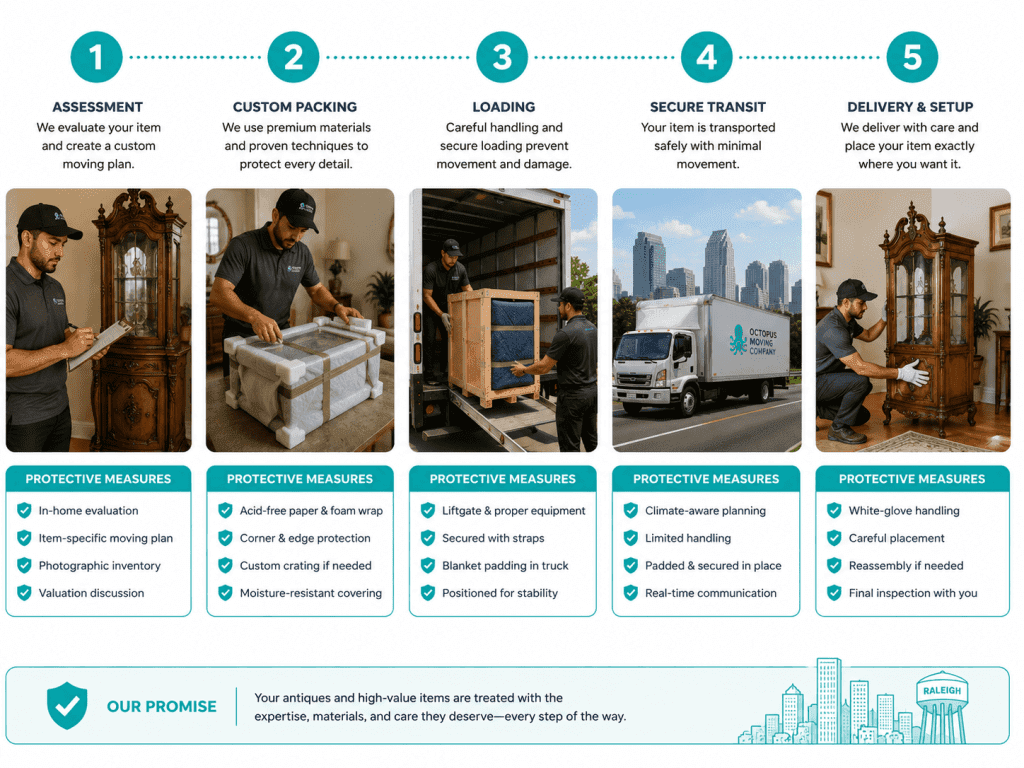
Here’s how this process should flow from start to finish.
A capable mover will want to know exactly what they’re dealing with. This means a detailed walkthrough of your collection, either in person or through a thorough virtual process, where each piece is evaluated on its own terms.
Every significant piece gets photographed and noted before packing begins. This creates a clear record that protects both you and the moving company.
Packing materials are selected based on each item’s specific needs. This is not a grab-what’s-available situation. Acid-free paper, glassine, custom foam, corner protectors, and crating materials are all matched to the pieces that need them.
Always handle pieces with clean gloves to avoid transferring oils or dirt. Never lift artwork by its frame or base; support it evenly from all sides.
High-value items don’t just get stacked with everything else. They’re positioned in the truck to minimize vibration exposure, prevent anything from shifting against them, and allow for proper unloading without rushing.
At the destination, pieces are unloaded in the right order, placed carefully in their intended locations, and unpacked with the same level of care that went into packing them.
At Octopus Moving and Storage, we work with Raleigh residents who have collections, heirlooms, and individual pieces that matter far too much to trust to a standard crew with standard materials. Our movers are full-time employees, not day laborers, which means they’re trained, consistent, and accountable on every job. We use professional-grade packing materials matched to each item, and we take the time to do a proper assessment before anything gets packed.
If you’re planning a move that includes antiques, fine art, or any high-value items, reach out to our team before your move date. The earlier we can understand what you’re working with, the better we can plan the right approach.
Get a free quote from Octopus Moving and Storage in Raleigh here.
Antiques and fine art require item-level assessment, specialized packing materials, and a crew trained in handling fragile and high-value pieces. A standard move prioritizes speed and volume. A high-value move prioritizes preservation and protection at every stage, from the initial consultation through final placement at the destination.
Paintings typically get wrapped in glassine as a first layer to protect the surface, followed by bubble wrap or foam padding, with rigid corner protectors applied to the frame before any outer wrap. For long-distance moves or particularly fragile works, custom wooden crates built to the piece’s dimensions provide the highest level of protection. Nothing should be packed in a way that allows movement inside the box.
For pieces with significant monetary or sentimental value, a specialist is worth it. A general mover may be capable on simple household items but may lack the materials, training, and item-specific approach that antiques require. The cost of damage to an irreplaceable piece far exceeds any savings from using a lower-cost general mover.
Basic released value coverage, which pays sixty cents per pound, is not appropriate for antiques or fine art. You should ask your mover about declared value protection or full replacement value coverage, and for significant collections, consider a third-party fine art insurance policy that covers agreed value rather than depreciated value. Get current appraisals in place before the move so any coverage is based on accurate valuations.
For moves involving antiques, fine art, or specialty items, four to six weeks of lead time is a reasonable starting point. This allows enough time for a proper pre-move assessment, any custom crating that may be needed, and thorough documentation of each piece before moving day.
Photograph every significant piece from multiple angles in good light. Note any pre-existing damage in writing. Gather any appraisals, certificates of authenticity, or provenance documents and keep them separate from the items. Walk through your collection with the moving crew before they begin so they understand exactly which pieces require the highest level of care and why.
Yes. Octopus Moving is fully licensed and insured for both local moves within North Carolina and interstate long-distance relocations. Long-distance moves with high-value items require additional planning around climate exposure during transit and multi-stage handling, all of which we account for in the move plan. Learn more about our Raleigh moving services here.
Ask specific questions about their packing process for each type of item you own. A qualified mover can explain exactly what materials they use and why, how they handle fragile surfaces, and what their process is if damage occurs. Also verify licensing through the FMCSA database for interstate moves and check the NC Utilities Commission for intrastate certification.
The process depends on your coverage type and the mover’s claims procedure. This is exactly why pre-move documentation and the right insurance coverage matter so much. Without photos showing the piece’s condition before the move and adequate coverage in place, your options are significantly limited. Always document before and always understand your coverage before moving day, not after.
Yes, particularly for oil paintings, antique wood furniture, textiles, and musical instruments. North Carolina’s summer humidity and temperature swings can cause wood to warp, paint to expand and contract, and textiles to absorb moisture. For sensitive pieces, the timing of the move, how long items are exposed during loading and unloading, and whether climate-controlled transit is needed all factor into a proper move plan.