Welcome to Octopus Moving Company | Massachusetts, Rhode Island, North Carolina
Welcome to Octopus Moving Company | Massachusetts, Rhode Island, North Carolina

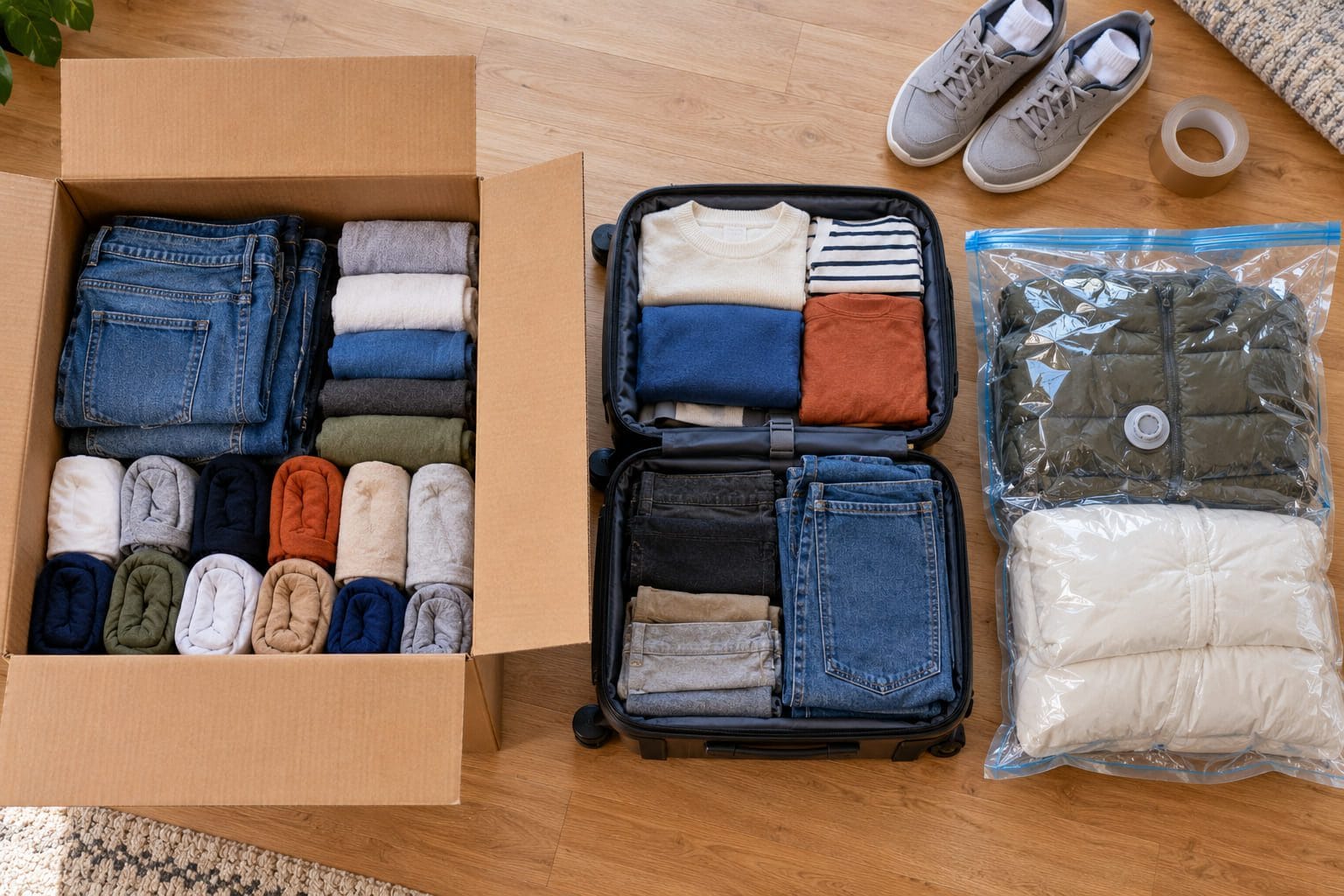
Clothes are the easiest thing in your home to pack, and the easiest to pack badly. Stuffed into whatever bag is nearby, they come out wrinkled, mixed up and sometimes musty. This guide covers how to pack clothes for moving from the three places they actually live: hangers, drawers and folded piles. You’ll learn when a wardrobe box is worth it, when a dresser can travel full, what belongs in suitcases and vacuum bags, and how to protect valuable pieces or clothes headed for storage. It comes from Octopus Moving, a licensed and insured mover with full-time crews in Massachusetts, Rhode Island, North Carolina and Illinois.
Every shirt you let go of is one less thing to fold, box, carry and unpack. That makes sorting the step that pays for all the others, and it belongs early. Our guide on how early to start packing puts deciding what goes at seven to eight weeks before the move. Pull everything out of the closet and the dresser, then make three piles: keep, donate and toss.
Donating beats the trash can. The EPA’s textile waste figures show 11.3 million tons of textiles went to U.S. landfills in 2018, while only 13 percent of clothing and footwear was recycled.
Then wash what you’re keeping. Dirty laundry in a sealed box smells worse on the other end, and it invites pests. The UC IPM guide to clothes moths notes that insects are less likely to feed on clean fabric than on soiled fabric, which matters when boxes sit in a truck or a storage room for weeks.
Once the keep pile is clean, pack in this order:
The four-week mark comes straight from our week-by-week moving checklist, which puts the rest of the move on the same calendar.
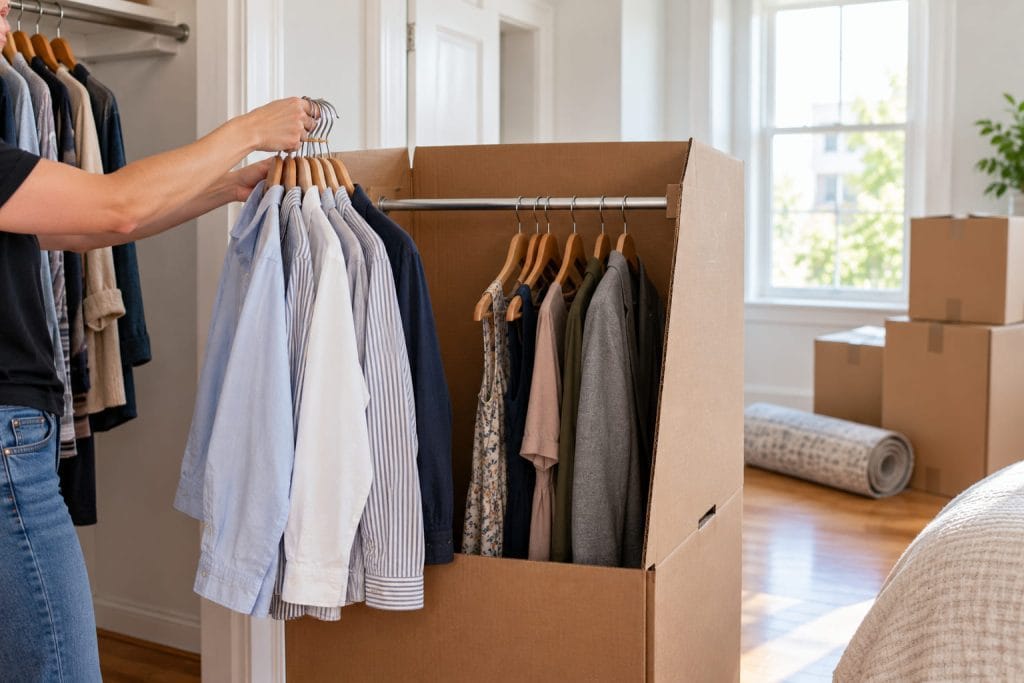
Taking clothes off hangers to fold them, then hanging every piece again at the new place, doubles the work. Leave them on the hanger. The real choice is what goes around them.
A wardrobe box is a tall carton with a metal bar across the top. Hangers go straight from your closet rod to the box rod, and clothes arrive still hanging and free of creases. Octopus Moving sells wardrobe boxes for $20 each and rents them for $10, which makes sense when you only need them for one trip.
For everyday shirts on a short local move, bags work. Gather 10 to 15 hangers, pull a large bag up from the bottom over the clothes, and tie the drawstring around the hooks. It’s cheap and fast. The downsides are real, though: bags tear, clothes wrinkle when other items land on top, and a black bag on moving day looks a lot like trash. Use a color you don’t use for garbage and put a strip of labeled tape on each one.
Our take: wardrobe boxes for suits, dresses and anything that shows a crease, and bags for the rest on a local move only.
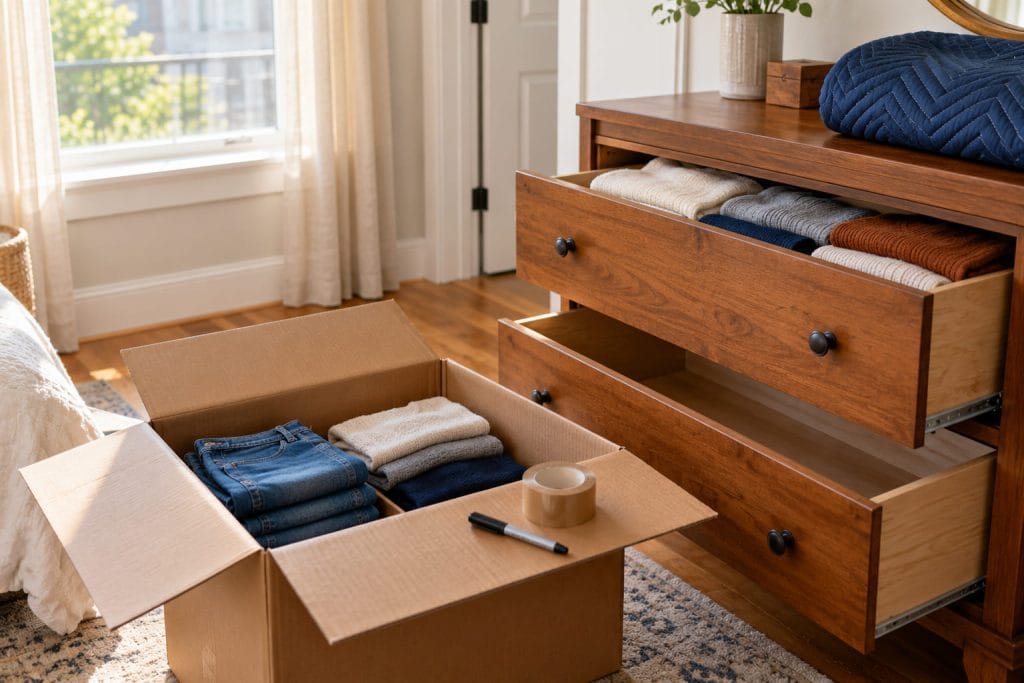
Drawers are already boxes, so leaving them full is tempting. Sometimes that works. The full answer on whether movers will take a dresser with clothes inside comes down to the weight of the piece and the route out of your home:
In Boston, where plenty of moves involve third-floor walk-ups, the stairs rule usually means emptying. Move each drawer’s contents into its own box or suitcase and label it with the drawer it came from, so unpacking is a straight swap back. If you’re not sure about a piece, ask the crew lead during the walkthrough, before anything gets lifted. Every Octopus mover is a full-time employee, not a day laborer, and they’ve carried enough dressers to know which ones can travel full.
Clothes are light, so they’re one of the few things that can fill a big box without making it too heavy to carry. Octopus’s large box, 24 by 20 by 21 inches, holds a stack of folded jeans and sweaters easily. Medium boxes, 16 inches on each side, suit kids’ clothes and shoes.
Puffer jackets, comforters and chunky knits take up far more room than they should. Vacuum bags fix that, using the same steps we walk through for packing pillows in vacuum bags. Put the sealed bags inside a box rather than loose on the truck, since they’re slippery and a punctured valve undoes the work. Give down and wool a day to fluff back up after you open them.
A few garments need more than a box. Under FMCSA’s liability and protection rules for interstate moves, items worth more than $100 per pound count as extraordinary value, and furs are one of the examples. List them in writing on the shipping documents, or the mover can limit its liability for them. Carry irreplaceable pieces, like a wedding dress, in your own car when you can.
If your move-out and move-in dates don’t line up, temperature-controlled moving and storage from Octopus starts at $75 a month for a room or less, with a one-month minimum. Clothes going in for more than a few weeks must be completely dry first. The University of Kentucky’s clothing storage guide warns that plastic can hold moisture and encourage mildew, so wardrobe boxes and cardboard are the better choice for a long stay.
Do both. Roll soft, casual pieces like T-shirts, leggings, pajamas and gym clothes, because rolls pack tighter and those fabrics don’t hold creases. Fold structured items flat, including jeans, sweaters and collared shirts. Anything that can’t handle a fold at all, such as suits and dresses, stays on its hanger in a wardrobe box.
Mixing the two in one box works well: flat-folded layers on the bottom, rolls filling the gaps.
Octopus Moving sells wardrobe boxes for $20 each and rents them for $10 a box. Renting is the better deal for a one-way move, because you don’t have to store or recycle tall flattened cartons afterward. Order them with the rest of your packing supplies when you book, so they’re on hand before the final packing week.
Short on boxes? Use bags for everyday shirts and save the wardrobe boxes for pieces that wrinkle.
Yes, for a local move. Keep the clothes on their hangers, pull a large bag up from the bottom over 10 to 15 hangers, and tie it around the hooks. Bags are cheap and quick, but they tear and let clothes wrinkle under other items, so use wardrobe boxes for suits, dresses and long-distance moves.
Label every bag with tape so nobody mistakes it for garbage on moving day.
Start packing clothes about four weeks before moving day, beginning with off-season items, formalwear and anything you rarely wear. Pack everyday clothes during the final week, and keep a bag with a few days of outfits that travels with you rather than on the truck. Sort and donate earlier, around seven to eight weeks out.
Moving in Boston near the September 1 lease turnover? Book the mover four to six weeks ahead, and give your closet the same head start.
For a long-distance move, pack clothes in wardrobe boxes and taped cardboard boxes instead of bags, because the load travels for days with other items stacked on top. Use vacuum bags for bulky pieces, label each box by person and room, and keep a week of outfits in a suitcase that rides with you.
Empty the dresser drawers too. Furniture gets handled and restacked more on a long haul, and loose weight inside makes that harder.
The question left is how much of this you want to do yourself. A sorted closet, a few wardrobe boxes and clear labels will get most households there on their own. If you’d rather not spend the last week folding, the Octopus packing crew can handle the closet, the drawers and the rest of the house. Call (781) 333-5383 or request a free moving estimate for your move in Massachusetts, Rhode Island, North Carolina or Illinois.