Welcome to Octopus Moving Company | Massachusetts, Rhode Island, North Carolina
Welcome to Octopus Moving Company | Massachusetts, Rhode Island, North Carolina

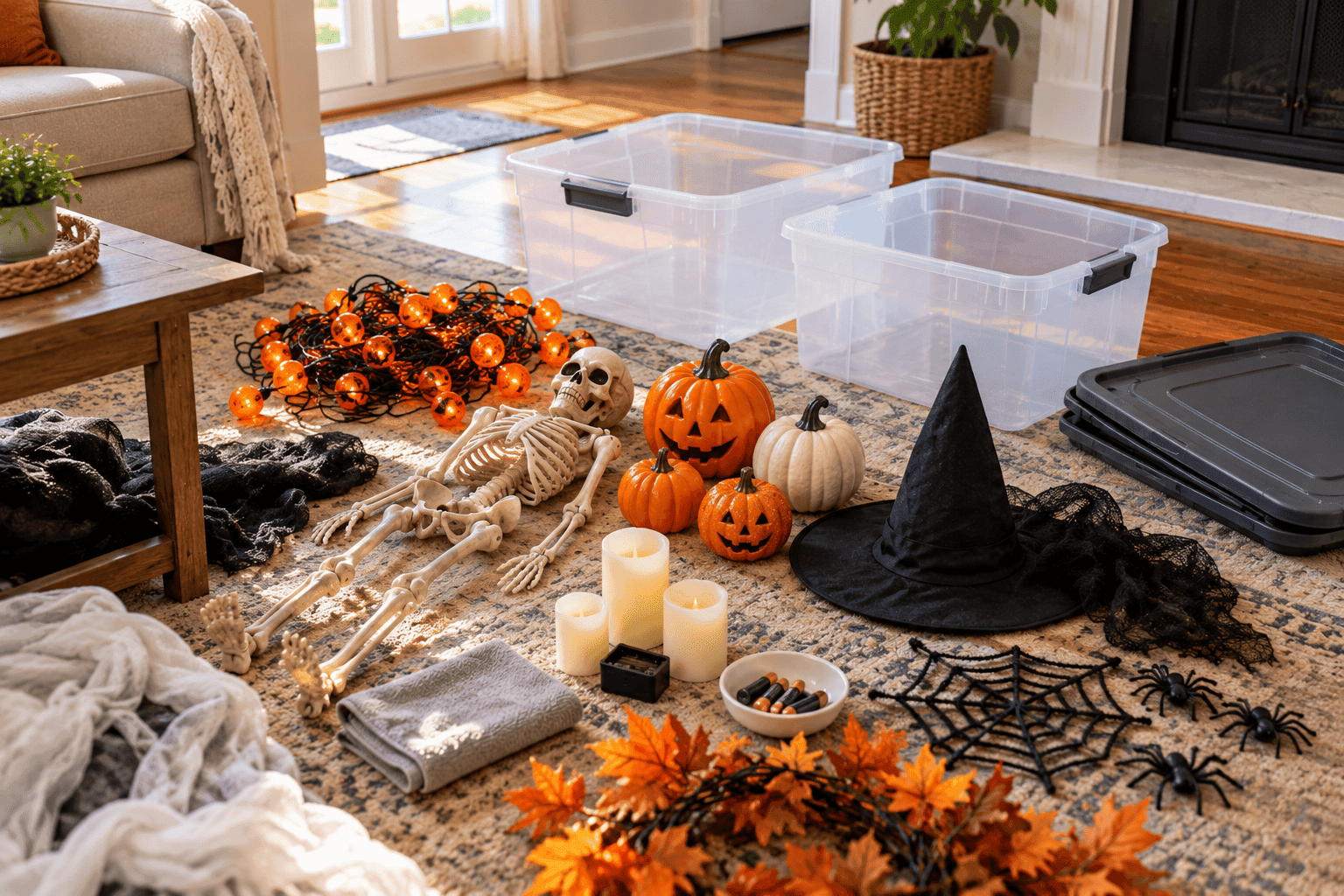
The National Retail Federation’s 2026 Halloween survey puts this year’s decoration spending at $4.3 billion, and most of that ends up in a garage, basement or closet on November 1. Storing Halloween decorations badly is how a working fog machine, a lit-up skeleton and a yard inflatable come out next fall dead, moldy or crushed. This guide covers what to do before anything goes in a bin, how to pack each type of decoration, which containers and labels hold up, and where to keep it all when your home is out of room. It comes from Octopus Moving, a mover that packs and stores people’s things every day.
Taking decorations down is the fast part. The ten minutes you spend before they go in a bin decides what you find next September. Work through everything on the floor first, not straight from the porch into a tote.
The battery step matters more than it looks. Duracell’s battery storage guidance says to remove batteries from a device you don’t expect to use for several months, and a Halloween prop sits for about ten. Leaking batteries corrode the contacts, and corroded contacts can leave a talking skeleton silent next year. Store the loose batteries at room temperature in a dry place, not in the bin with the prop.
Lights get a stricter test. The Electrical Safety Foundation’s post-holiday guidance says to discard any strings that are cracked, frayed or show damaged wire insulation, and to keep indoor and outdoor decorations labeled or stored separately. A damaged string costs a few dollars to replace and isn’t worth a fire risk next year.
Most damage comes from packing everything the same way. A ceramic pumpkin and a foam tombstone need different treatment, so group your Halloween storage by what each piece can take.
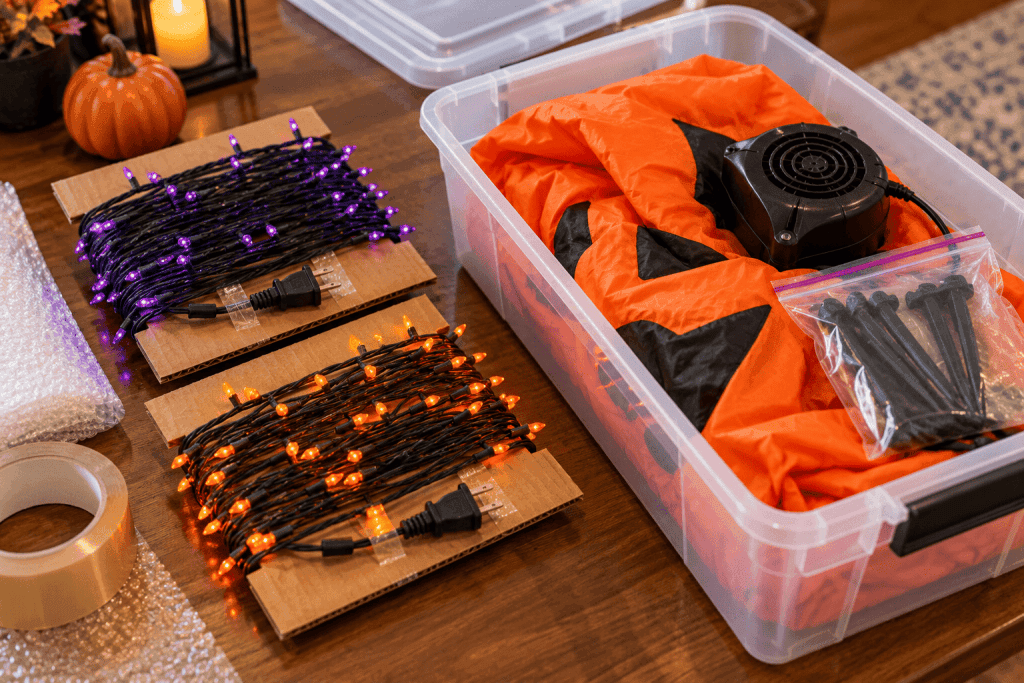
Wind light strings around a flat piece of cardboard instead of balling them up, which kinks the wire and tangles the bulbs. Tape the plug end down so it doesn’t snag. Keep animatronics in their original boxes if you still have them, with the batteries out and the power cord coiled and tied.
An inflatable has to be bone dry before it’s folded. Fabric packed damp can grow mildew in storage, and that smell rarely washes out. Let it run inflated indoors for a while or hang it to dry, brush off grass and dirt, then fold it loosely with the fan unit on top. Put the stakes and tethers in a zip bag inside the same container so the whole setup stays together.
Ceramic, glass and resin pieces get wrapped one at a time in packing paper, then bubble wrap for anything thin or pointed. Light-up decor is basically a small lamp, so the same rules apply as when we pack lamps for moving: unscrew the bulbs, wrap shades and glass parts separately, fill the gaps with crumpled paper, and mark the box fragile.
Poseable skeletons and tall figures store far smaller once you remove what comes off: arms, heads and stands. Bag the hardware and tape the bag to the largest piece. Wash costumes before storing them, fold them flat, and skip the stretchy spider webbing; it rarely comes apart cleanly and is cheaper to replace than to untangle.
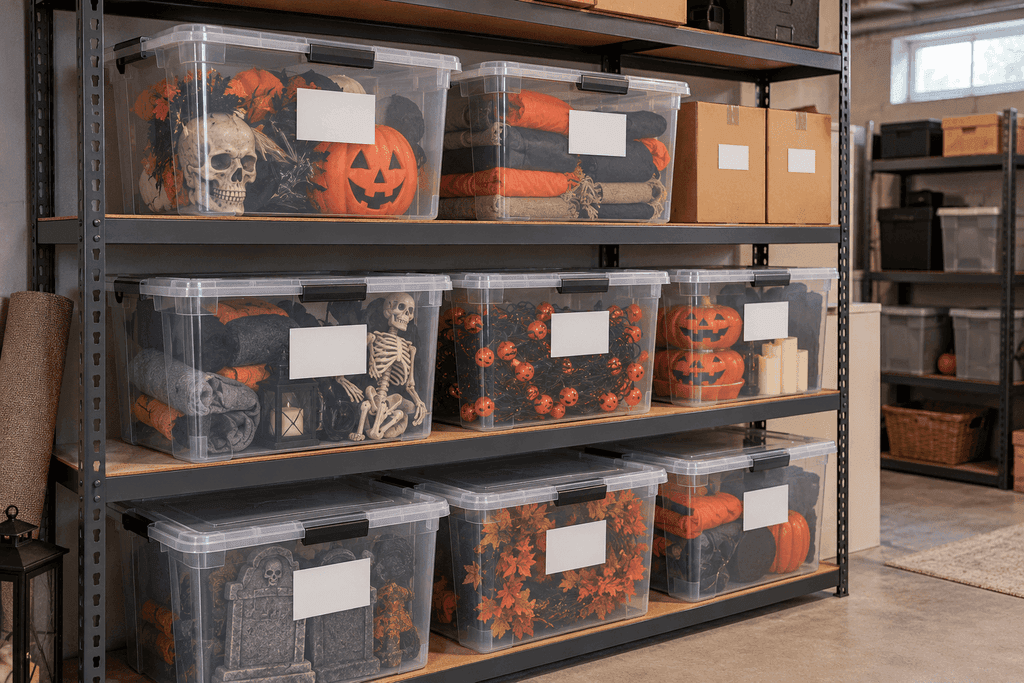
The container matters most where your storage is damp. In a garage or basement, clear plastic bins with tight lids beat cardboard, because cardboard soaks up moisture and gives pests something to chew. In a dry closet or a temperature-controlled space, sturdy cardboard boxes are fine and cost less.
If you’re short on materials, Octopus offers the same packing paper, bubble wrap and boxes our crews use on moves. The medium box is 16 inches on each side and the large is 24 by 20 by 21, which is plenty of room for foam tombstones and folded inflatables.
Where the bins live counts as much as how they’re packed. Attics run hot in summer, which melts candles and warps plastic. Basements run damp. The EPA’s guide to mold and moisture recommends keeping indoor humidity below 60 percent, ideally between 30 and 50, and says the key to mold control is moisture control. A spot that feels musty fails that test.
For a lot of Boston apartments, there’s simply no good spot. Octopus offers temperature-controlled moving and storage starting at $75 a month for a room or less, with a one-month minimum. The crew picks up your things and delivers them back when you need them, so it fits a season’s worth of decorations stored alongside other items better than something you need every few weeks.
Price-wise, it lands close to renting a unit yourself. Our breakdown of what it costs to store furniture with a moving company puts both at around $200 a month for a one-bedroom’s worth, with insurance and the hauling handled on the mover’s side.
Use plastic bins with tight lids if your decorations live in a garage, basement or shed, because cardboard absorbs moisture and attracts pests. In a dry, temperature-controlled space, sturdy cardboard boxes work fine and cost less. Either way, make sure everything is completely dry before it’s sealed, or the container just traps the moisture inside.
Clear bins have one more advantage: you can see what’s inside without opening them.
The best place to store Halloween decorations is somewhere dry, out of direct sun and away from big temperature swings, such as an interior closet or a climate-controlled storage space. Avoid hot attics, which melt candles and warp plastic, and damp basements, where humidity above 60 percent invites mold on fabric and inflatables.
Keep electrical decorations where children and pets can’t get into them.
Store a Halloween inflatable only after it’s completely dry. Brush off dirt and grass, let it dry fully, then fold it loosely along its natural seams and set the fan unit on top. Keep the stakes, tethers and power cord in a bag inside the same bin, and store it somewhere dry so the fabric doesn’t mildew.
Avoid folding it tightly or stacking heavy boxes on it, which creases the fabric.
Yes. Remove batteries from every animatronic, light-up prop and remote before you store them, since they’ll sit unused for most of the year. Batteries left in place can leak and corrode the contacts, which is why many props stop working by the next season. Store the batteries separately at room temperature in a dry spot.
Test them before you put them back in next fall; partly drained batteries make props sound slow and distorted.
Storing Halloween decorations at home costs only the bins, usually a few plastic totes. If you’re out of space, Octopus Moving’s temperature-controlled storage starts at $75 a month for a room or less, with a one-month minimum, and includes pickup and delivery. That suits decorations stored with other belongings better than a few bins on their own.
Larger storage tiers start at $200 a month for a one-bedroom’s worth of belongings.
Most households can handle storing Halloween decorations with a free afternoon, a few good bins and a dry closet. If the decorations are competing with everything else for space, or you’re moving before next October anyway, it may make more sense to pack and store them with the rest. Call (781) 333-5383 or ask us about storage in Massachusetts, Rhode Island, North Carolina or Illinois.