Welcome to Octopus Moving Company | Massachusetts, Rhode Island, North Carolina
Welcome to Octopus Moving Company | Massachusetts, Rhode Island, North Carolina

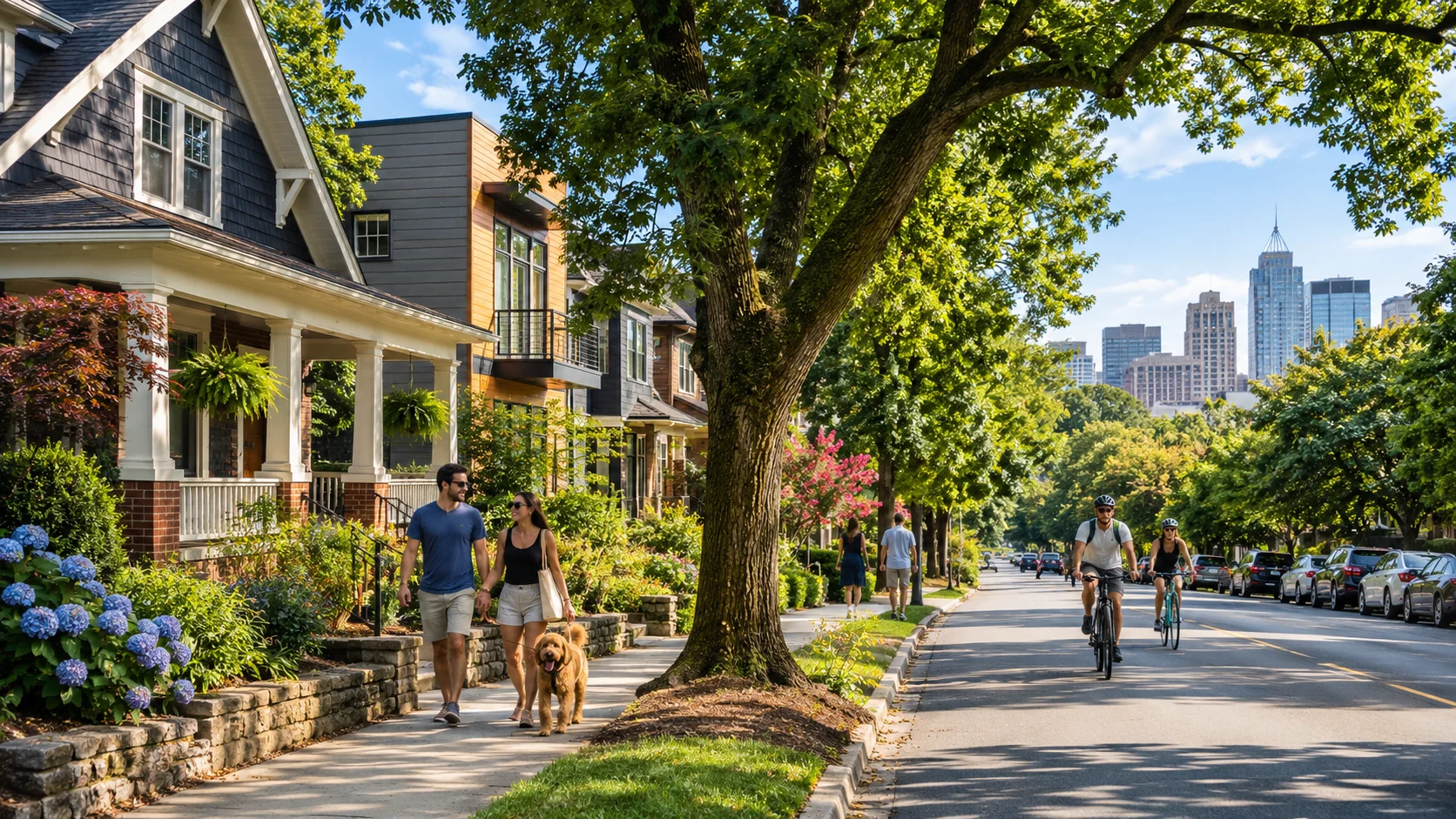
If you are asking is Raleigh a good place to live, the short answer is yes for many people, especially professionals, families, students, and anyone who wants access to a growing job market without living in a much larger city. Raleigh combines established neighborhoods, newer suburban development, universities, green space, and access to the wider Research Triangle. But living in Raleigh, NC also comes with tradeoffs. Housing is no longer especially cheap, traffic can be frustrating, summers are hot and humid, and where you choose to live can make a big difference in your daily routine.
For someone who wants career opportunities, suburban options, outdoor space, and the amenities of a growing city, Raleigh is a strong place to consider.
The city itself had an estimated population of 506,306 in 2025, up 8.2% from its 2020 population base, according to the U.S. Census Bureau. That pace of growth helps explain both sides of Raleigh’s appeal: there are more employers, neighborhoods, restaurants, housing developments, and services, but there is also more competition for housing and more pressure on roads and infrastructure.
Raleigh also functions as part of a larger region rather than as an isolated city. Cary, Durham, Morrisville, Apex, Wake Forest, Chapel Hill, and Research Triangle Park are all part of the day-to-day geography for many residents.
That matters when you are deciding where to live. A home that looks conveniently located on a map may not be convenient for your workplace, school, or regular trips across the Triangle.
If relocation is already on your calendar, Octopus Moving’s Raleigh moving services cover moves within Raleigh as well as nearby Triangle communities.
One of Raleigh’s biggest strengths is access to the broader Triangle economy.
Research Triangle Park sits between Raleigh, Durham, and Chapel Hill and covers roughly 7,000 acres. Its official organization lists more than 385 companies across fields including biotechnology, life sciences, information technology, finance, education, and research.
That means living in Raleigh can make sense for people whose jobs are not actually located in downtown Raleigh. Employers across Wake County and RTP include organizations in healthcare, universities, technology, state government, pharmaceuticals, finance, and research.
For professionals who want to change employers without necessarily changing regions, that diversity is a meaningful advantage.
Raleigh does not force everyone into the same type of neighborhood.
You can live close to downtown activity, choose an older neighborhood with more architectural character, rent near a university, or move farther out toward newer townhomes and single-family developments.
That flexibility is particularly useful for people whose needs change over time. Someone may start in an apartment closer to downtown or NC State and later move toward a larger home elsewhere in Raleigh or the Triangle.
For a move between apartments, townhomes, condos, or houses in the area, Octopus Moving offers local moving in Raleigh with planning around building access, parking, stairs, elevators, and other move-day logistics.
Raleigh’s greenway system is a genuine everyday benefit rather than a small collection of isolated trails.
The city’s Capital Area Greenway includes more than 100 miles of trails across 28 individual trails. They connect residents with parks and destinations throughout the city and give walkers, runners, and cyclists options that do not require leaving Raleigh for the day.
That makes Raleigh a good fit for people who like having outdoor recreation nearby without giving up city amenities.
NC State gives Raleigh a significant student population, and the wider Triangle adds Duke, UNC-Chapel Hill, community colleges, and other institutions within the region.
For students, the practical question is often less about Raleigh as a whole and more about proximity to campus, work, and housing. A cheaper apartment farther away can become less attractive once commute time and transportation are factored in.
Students changing dorms, apartments, or off-campus housing can also use dedicated college movers in Raleigh, including help with campus moves, apartment relocations, loading, unloading, and furniture.
Raleigh is growing quickly, but it does not have the scale or intensity of New York, Chicago, Los Angeles, or even some larger Sun Belt cities.
That can be a major advantage if you want restaurants, entertainment, employment, universities, healthcare, and an airport nearby without wanting a highly dense urban environment.
For many people considering moving to Raleigh, this middle ground is part of the appeal.
One of the outdated ideas about living in Raleigh, NC is that housing is automatically inexpensive.
According to U.S. Census Bureau data covering 2020 through 2024, Raleigh’s median owner-occupied home value was $415,800 and median gross rent was $1,572. Those figures are citywide medians rather than current asking prices, but they show why relocating households should not assume Raleigh is a low-cost market.
Your budget will vary significantly depending on location, housing type, and whether you are looking inside Raleigh or in a surrounding Triangle community.
Raleigh has public transportation, and GoRaleigh operates a network of city bus routes. Regional service also connects parts of Raleigh with Cary, Durham, Chapel Hill, Wake Forest, RTP, and other destinations.
Still, Raleigh is not a city where everyone can comfortably organize daily life around transit.
If you live near work and central amenities, you may drive less. If your job is in RTP, Durham, Cary, or another suburban employment center, a car is often much more practical.
The Census Bureau reports a mean commute time of 23 minutes for Raleigh workers during the 2020-2024 period, but your own commute can be very different depending on the route and time of day.
Raleigh’s growth is visible.
New apartments, subdivisions, townhomes, commercial districts, and road projects are changing parts of the city and surrounding communities. That creates more housing and amenities, but it can also mean construction traffic and longer trips on busy corridors.
This is one reason to test your potential commute before choosing a neighborhood. Drive it during the hours you would actually travel, not on a quiet weekend afternoon.
Raleigh summers are hot and humid. If you are moving from the Northeast, Midwest, or another cooler climate, July and August may take some adjustment.
The upside is a relatively long season for outdoor activities. The downside is that summer errands, exercise, and moving day itself can feel much harder during the hottest part of the afternoon.
Raleigh, Durham, Cary, Chapel Hill, Apex, Morrisville, and Wake Forest are frequently discussed as part of one region, but they are not one compact city.
Someone can say they live “in the Triangle” while being a substantial drive from another part of it.
If your household has two people commuting to different cities, location becomes especially important. Sometimes the best neighborhood is not the trendiest one. It is the one that prevents both people from spending too much of the week in the car.
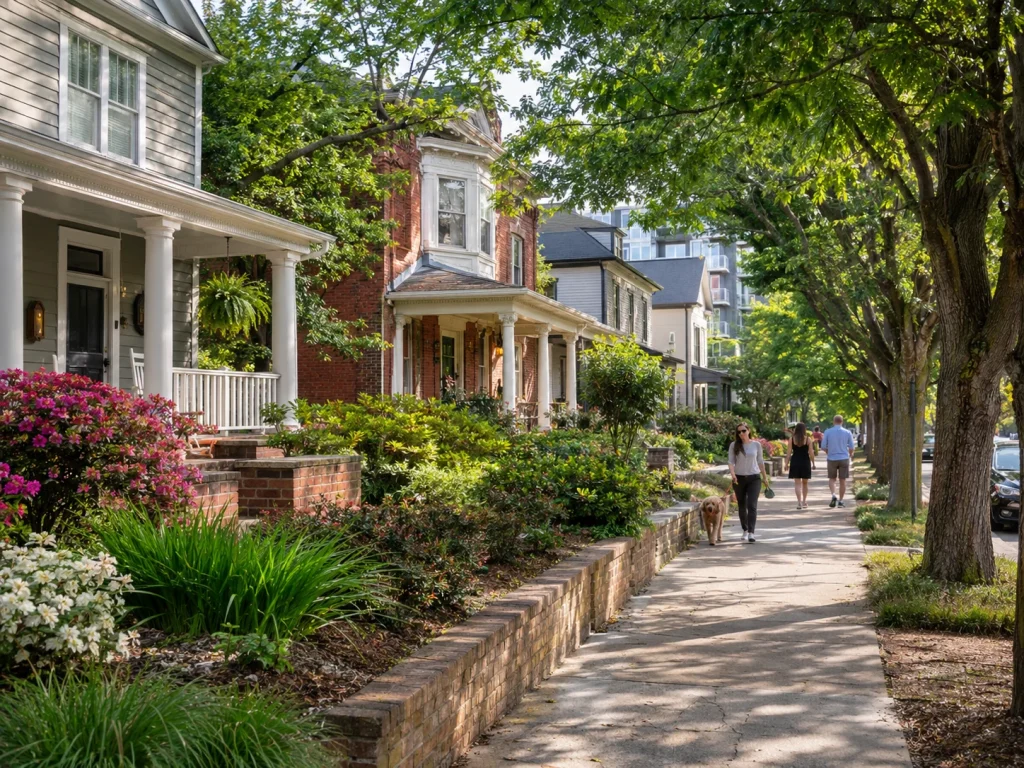
There is no single list of the best neighborhoods in Raleigh that works for everyone. The right area depends on whether you prioritize walkability, a larger home, historic character, nightlife, campus access, or a shorter commute.
Downtown works well for people who want restaurants, events, offices, and city amenities close by.
It is a better fit for apartment and condo living than for someone whose main priority is a large suburban lot. Building access, loading areas, elevators, and parking are also worth checking before signing a lease and again before moving day.
Oakwood is one of Raleigh’s most distinctive older neighborhoods. The City of Raleigh describes it as having the city’s largest collection of nineteenth-century Victorian-era homes and a wide range of architectural styles.
It suits people who value older homes and historic character more than new-construction uniformity.
Five Points and the surrounding older North Raleigh neighborhoods appeal to people who want residential streets while remaining reasonably close to downtown.
Housing stock varies, so this is an area where visiting individual streets matters more than relying on a broad neighborhood label.
The Midtown area around North Hills is attractive to people who want shopping, restaurants, offices, apartments, and newer development concentrated in one part of Raleigh.
It can work particularly well if your commute keeps you on the north side of the city.
Brier Creek can make sense for people who prioritize access toward Raleigh-Durham International Airport, RTP, and the northwestern side of the Triangle.
The lifestyle is more car-oriented, but the location can be practical for people who regularly travel between Raleigh and RTP.
They are not Raleigh neighborhoods. They are separate communities.
But anyone considering Raleigh should still compare them because moving to Raleigh often turns into a broader Triangle housing search. Cary, Apex, Wake Forest, Morrisville, and Durham can all make more sense than Raleigh proper depending on your job, preferred home type, and commute.
Raleigh is particularly well suited to a few types of residents.
Professionals working in technology, healthcare, research, education, government, or life sciences benefit from access to employers throughout Raleigh, Wake County, and RTP.
Families who want more housing options than a dense urban core provides can compare Raleigh neighborhoods with suburban communities throughout the Triangle.
Students and recent graduates get access to NC State and the broader Triangle university ecosystem while living in a city with a substantial professional job market.
Remote and hybrid workers may appreciate having more freedom to choose a neighborhood around lifestyle rather than a five-day commute.
People relocating from larger metros may like Raleigh’s balance of city amenities and lower density.
Raleigh is less compelling if your ideal city is highly walkable, built around rail transit, cool in summer, or filled with nonstop big-city activity.
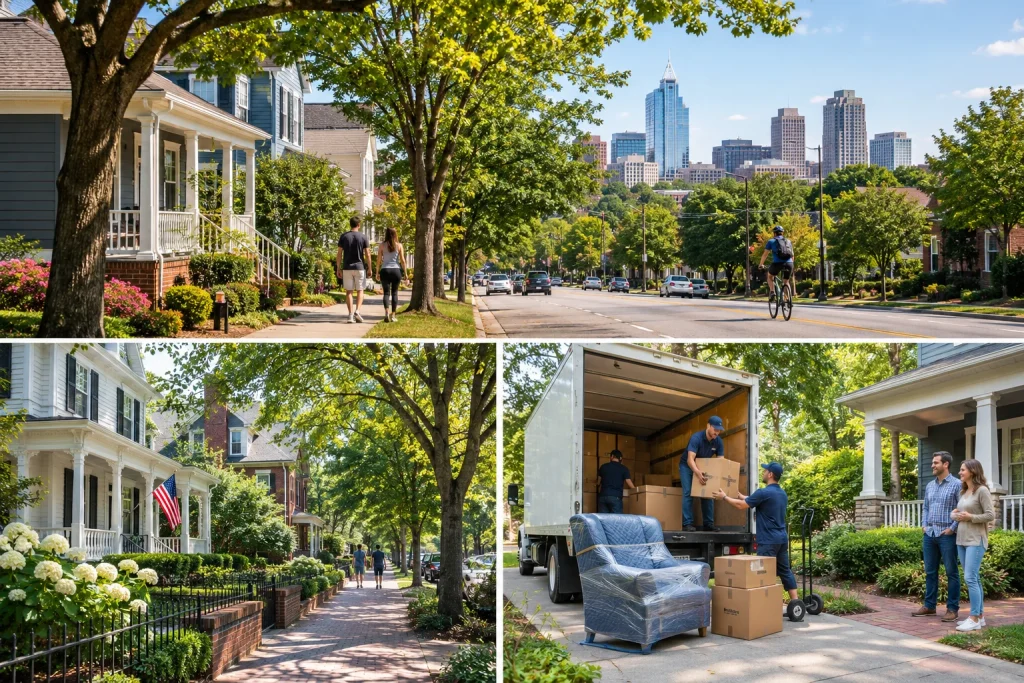
Start with your daily geography.
Before choosing a home, map your workplace, school, grocery stores, airport trips, childcare, and any other destinations you will use every week. Then test the routes during realistic traffic periods.
If you are renting, confirm elevator rules, loading access, parking, and move-in times before the movers arrive. If you are buying in a managed community, check HOA requirements and truck access.
Students should pay particular attention to campus move-in windows and parking restrictions.
And if your timeline changes unexpectedly, Octopus Moving also provides same-day moving assistance in Raleigh when scheduling allows.
For people arriving from another state or relocating beyond the Triangle, planning is different again. Inventory, distance, delivery timing, and packing become more important than simply choosing a truck-access window. Octopus Moving’s long-distance moving services are designed for relocations to and from the Raleigh area.
Raleigh can be a good fit for families that want access to employment, parks, suburban-style housing, and the amenities of the broader Triangle. The best location depends heavily on work commutes, housing budget, childcare, and school assignment, so compare individual neighborhoods rather than treating all of Raleigh as the same market.
Raleigh is no longer a particularly cheap housing market. U.S. Census Bureau data for 2020-2024 puts the median owner-occupied home value at $415,800 and median gross rent at $1,572. Current asking prices can be higher or lower depending on the neighborhood and property.
Yes, particularly for professionals working in technology, healthcare, research, education, government, and related fields. Raleigh also gives residents access to employers elsewhere in the Research Triangle rather than limiting job searches to the city itself.
It is possible in some locations, but it takes planning. GoRaleigh provides city bus service, and regional transit connects Raleigh with other Triangle destinations. For many residents, especially those commuting to suburban job centers or RTP, having a car remains much more convenient.
For many newcomers, the biggest surprise is how spread out the area is. Raleigh itself is only one part of the Triangle, and jobs, universities, shopping, and housing can be scattered across several cities. Choosing the wrong location can turn an otherwise good move into a frustrating daily commute.
Yes. The U.S. Census Bureau estimated Raleigh’s population at 506,306 in July 2025, an increase of 8.2% from the April 2020 population estimate base. That growth is one reason Raleigh continues to see new housing and development across the city.
So, is Raleigh a good place to live? For many people, yes. Its strongest advantages are the Triangle job market, neighborhood variety, universities, outdoor space, and the ability to choose between a more urban or suburban lifestyle. The tradeoffs are rising housing costs, car dependence, summer heat, and a rapidly growing region where location matters.
If Raleigh fits what you are looking for, the next step is making the relocation itself manageable. Contact Octopus Moving for a Raleigh moving estimate and build your moving plan around your home, schedule, and destination.