Welcome to Octopus Moving Company | Massachusetts, Rhode Island, North Carolina
Welcome to Octopus Moving Company | Massachusetts, Rhode Island, North Carolina

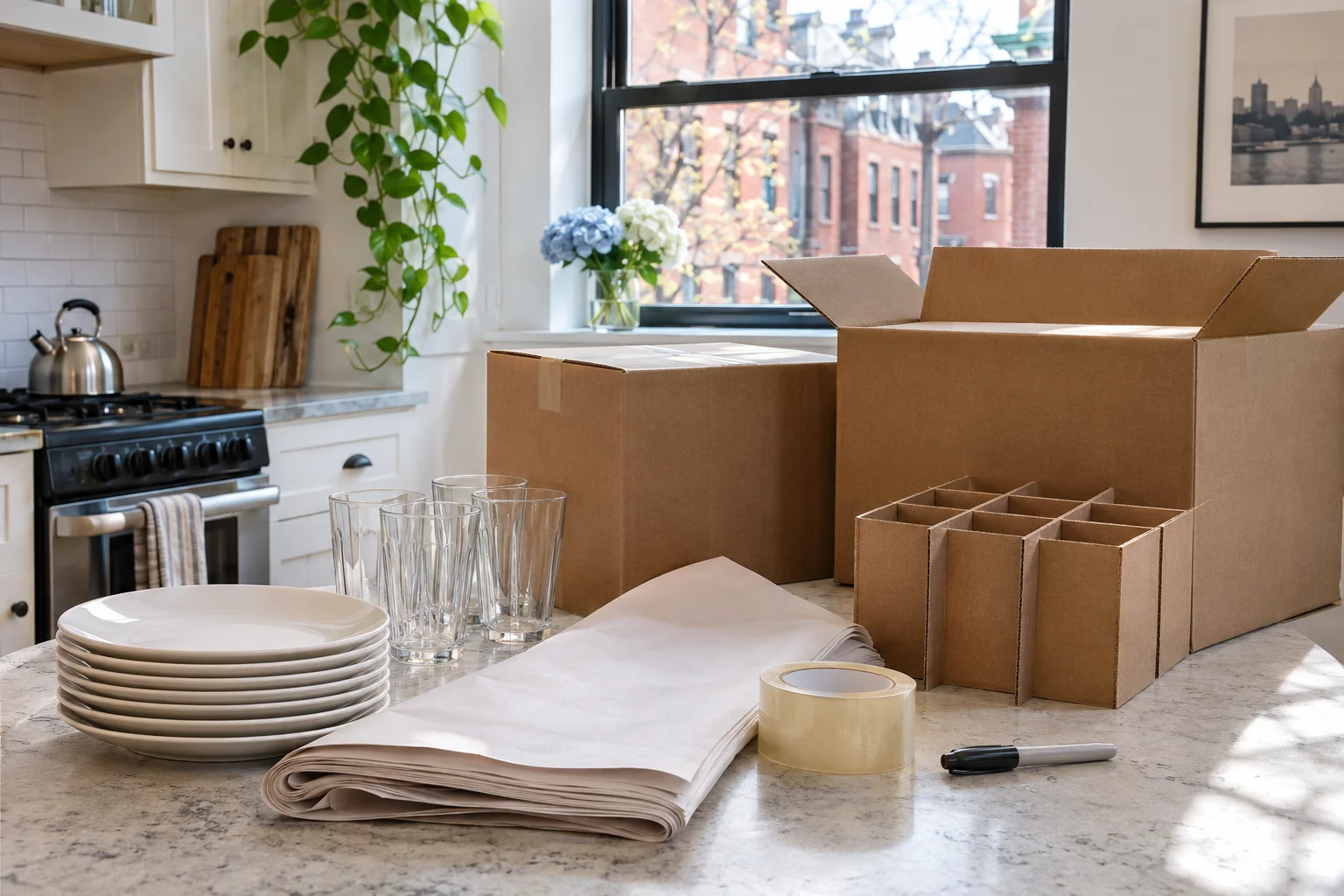
Learning how to pack dishes for moving starts with one rule: stop fragile items from touching or shifting inside the box. Use sturdy cartons, wrap each piece, add cushioning below and above the load, and fill empty spaces before sealing. Plates, bowls, everyday glasses, and stemware need slightly different handling, but the goal is the same: keep pressure and movement away from breakable surfaces.
Start with the box, not the dishes. Choose a rigid corrugated box, reinforce the bottom seams with tape, and add a cushion of crumpled packing paper before the first item goes in.
For fragile contents, UPS packaging guidance recommends wrapping items separately and filling open space so contents cannot move easily.
If you would rather have the kitchen packed as part of the move, Octopus Moving offers moving and packing services that can be added to your relocation.
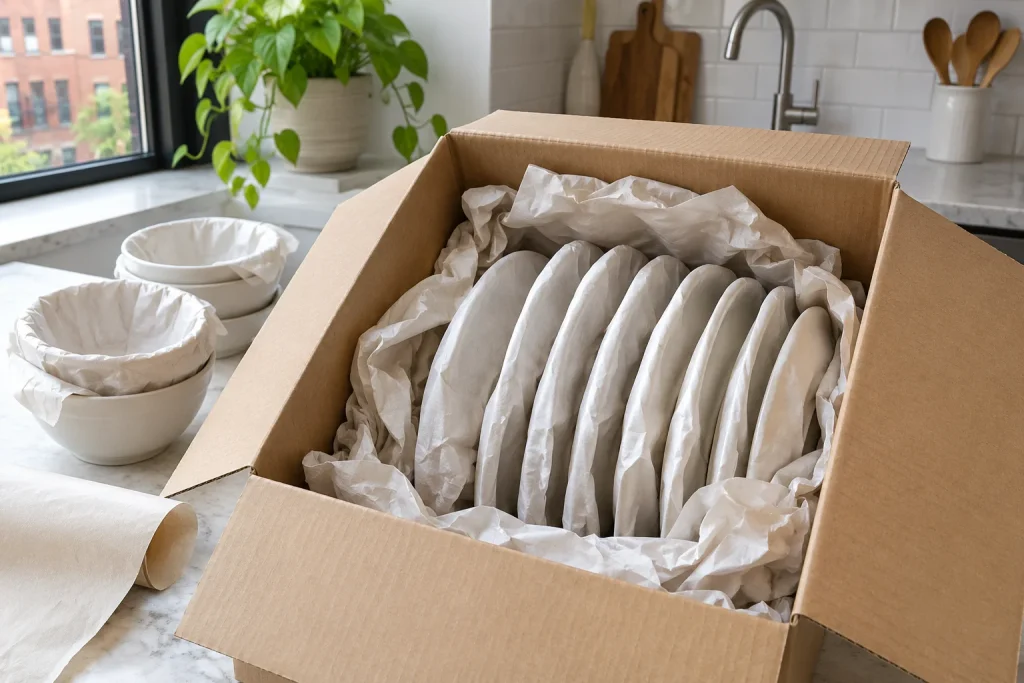
Wrap every plate separately and place plates on their edges. A vertical row avoids putting the full weight of a flat stack onto the bottom pieces and leaves room to cushion both sides.
Wrap each plate completely with packing paper.
Place heavier dinner plates first, standing vertically in the padded box.
Add crumpled paper between groups and along the box walls.
Finish with cushioning on top before sealing.
This is the core answer to how to pack plates for moving. The Home Depot’s dish-packing guide also recommends wrapping pieces individually, keeping heavier items lower, and filling open space.
Wrap bowls individually too. If you nest bowls, place paper between every surface and wrap the small group together. Keep heavier serving bowls lower in the box.
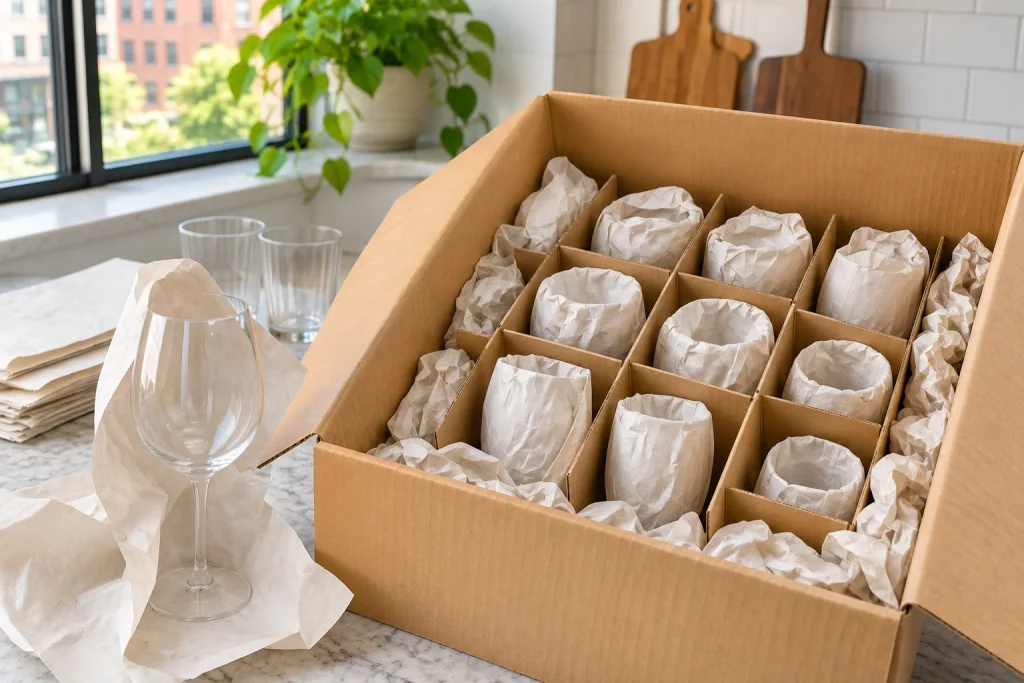
For how to pack glasses for moving, put a little crumpled paper inside each glass, wrap the outside from rim to base, and keep the finished piece upright. Dividers help, but each cell should still be padded so the glass cannot rattle.
For everyday drinkware, Lowe’s packing guide recommends keeping glasses upright and filling both the glasses and empty box space with paper.
Wine glasses need extra protection at the stem and rim. Lightly fill the bowl with paper, wrap the bowl, then build padding around the stem without squeezing it. Place each glass upright in its own divider cell when possible. Never load plates or cookware on top of stemware.
The same method works for how to pack glassware for moving, including flutes, goblets, and delicate tumblers.
For a move with more time on the road, careful packing matters even more. Octopus Moving’s long-distance moving service covers interstate relocations and can be paired with packing support.
Knowing how to pack kitchen for moving is easier when you work cabinet by cabinet. Keep cookware, knives, pantry goods, appliances, and fragile dishes in separate boxes instead of using breakables to fill random gaps.
Use smaller boxes for heavy pots and pans, wrap glass lids separately, and secure knife blades so they cannot cut through cardboard. Keep one first-night kitchen box with a plate, cup, basic utensils, dish soap, paper towels, and breakfast essentials.
If this is your first place, Octopus Moving’s first apartment checklist helps separate move-in-day essentials from items that can stay packed.
For stairs, elevators, and tight hallways, the company’s Boston apartment moving service is focused on residential and apartment relocations.
If there is a gap between homes, you can also combine the relocation with moving and storage in Boston. Keep dish boxes sealed, dry, and easy to identify before storage.
Pack plates on their side, standing vertically like records, after wrapping each one. This reduces the direct weight pressing through a flat stack. Cushion the bottom, sides, and top of the box, and fill gaps so the plates cannot shift while the box is carried.
Plain packing paper is the most versatile material for dishes because it conforms closely to plates, bowls, and glasses without adding much bulk. Bubble cushioning is useful for especially fragile pieces, but each item should still be separated so hard surfaces do not touch.
Wrap every glass individually, add light padding inside, and place it upright in a sturdy box. Dividers help keep glasses from touching. Fill empty space around the cells or wrapped glasses, then add cushioning on top so nothing moves when the box is lifted.
There is no fixed number because dish size, box strength, and weight vary. Stop adding pieces before the carton becomes difficult to lift safely. A smaller, well-packed box is better than a large box that is overloaded, hard to carry, or more likely to fail.
Professional packing is useful when you have a large kitchen, valuable china or stemware, a tight schedule, or a long-distance move. It also makes sense when you want one crew to handle packing, loading, transportation, and unloading instead of coordinating those steps separately.
Good dish packing is mostly about controlling movement. Use sturdy boxes, wrap each breakable piece, keep plates on edge, keep glasses upright, and fill open space before sealing the carton.
If you want help packing the kitchen or planning the whole move, get a free moving estimate from Octopus Moving and tell the team what needs packing, whether the move is local or long-distance, and whether storage is part of the plan.